Mode 3: Interactive Booths
Effort: Moderate · Reach: Deep Engagement · Sponsor: Supported
Structured engagement at events. Shift from “information booth” to experience booth. Convert curiosity into understanding.
When to Use This Mode
- You have access to a community event with booth space (art walk, flea market, festival, street fair)
- You have 2–4 people who can staff a table for several hours
- A sponsor has shipped or is willing to ship a tabling kit
- You want to have real conversations, not just hand out flyers
Volunteer Requirements
- City Lead: coordinates event logistics, submits AAR
- 1–3 table staffers: comfortable with brief, nonpartisan conversations
- Commitment: 1 setup event + 1 event day + AAR submission
- No expertise in AI required — the talk-track handles it
Materials Kit
Core kit (sponsor-shipped):
- Tablecloth (branded or neutral)
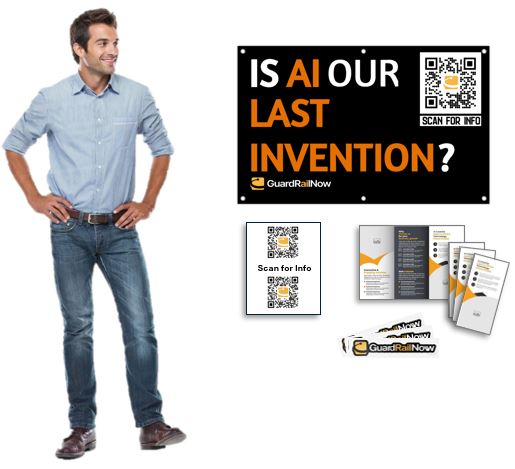
- 2–3 posters / banner (vertical pull-up or tabletop)
- Flyers (100–250 count per event)
- QR cards (50–100 count; trackable per event)
- FAQ sheet (1-page; double-sided)
- Talk-track card (laminated; one per staffer)
- Setup instruction sheet
- Optional: stickers, buttons, small give-aways
Self-serve (if no sponsor kit):
- Print-at-home flyer
- Printed FAQ
- Handwritten or printed table sign
Visual Setup Rules
- One clear hook visible from 20 feet
- No clutter on the table surface; less is more
- Core question displayed prominently: “Would you trust AI to run your city?”
- QR code visible from the front of the table
Banner Example
Step-by-Step Setup
- Find the event. Target events with mixed demographics and browsing posture. Art walks, flea markets, farmers markets, and festivals work well.
- Secure booth space. Contact event organizers. Frame as a “community information booth on AI policy.” Budget $25–75 for most community event booth fees.
- Notify sponsor (if applicable). Confirm event details 2+ weeks out so sponsor can ship kit in time.
- Brief staffers. Walk through the talk-track card before the event.
- Set up. Arrive 30 minutes early. No chairs behind the table — standing posture invites engagement.
- Staff the booth. Use the talk-track. Hand out QR cards. Log notable conversations for the AAR.
- Break down and report. Count remaining materials. Submit AAR within 7 days.
Talk-Track
Opening:
“Hi — we’re raising awareness about AI safety policy. Can I ask you a quick question? Would you trust an AI system to make major decisions for your city — zoning, emergency response, budgets?”
If they engage:
“That’s exactly the question we’re trying to get more people thinking about. AI systems are advancing faster than the policies governing them. We’re not anti-technology — we just want people to know this conversation is happening.”
Closing:
“Here’s a card with a 2-minute overview and a link to get involved if you’re interested.”
If they push back:
“I get it — reasonable people disagree on this. We’re not here to convince anyone, just to make sure people know the issue exists. The QR code goes to a pretty balanced overview if you want to look at it on your own time.”
Success Metrics
- Events staffed per month
- Materials distributed
- QR scan rate per event
- Estimated meaningful conversations (30+ seconds)
- New volunteer inquiries
Related Playbooks
- Micro-Gatherings — for people who want to go deeper after the booth
- Signal Actions — pre-event visibility boost near the venue
- Digital Amplification — the QR destination your cards point to